
AZCON Supervisory Board
A platform that moves AZCON Holding's board meetings, votes and decisions online. I led its design, zero to MVP.
- Problem
- Board meetings, votes and signatures happened on paper and in person
- What I did
- Led the design from zero to MVP: a 7-step meeting flow with different logic for each role, in three weeks
- Result
- Stakeholder sign-off, and an MVP for ~500 users
- Role
- Lead Product Designer, UX owner
- Company
- AzSoftware
- Client
- AZCON Holding
- Scope
- MVP, ~500 users, 5 roles
- Design team
- Rufat Gadirli, Rufat Rashidov
Two designers, three weeks
That was the budget: Rufat Rashidov and me. Yes, two Rufats. I worked with the backend engineers on the database structure from day one, so the flow and the data model wouldn't end up arguing later.
The secretary runs the meeting
The board secretary is the one person who touches every meeting from the first draft to the archived protocol: they schedule it, chase the materials, run the room and collect the signatures. Board members open the app a few times a quarter, the secretary lives in it, so the meeting flow carries most of the logic and most of the edge cases. The six players below follow one meeting through it, rebuilt in code from the Figma file, with fictional people and fictional agenda items.
One registry, two chips
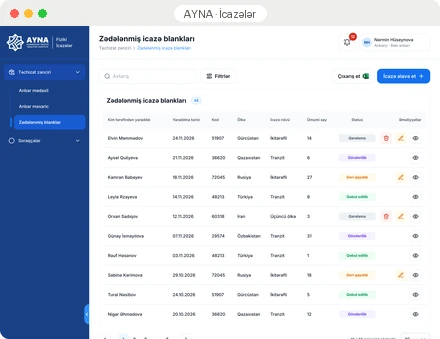
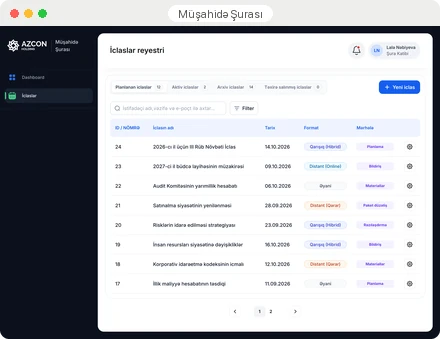
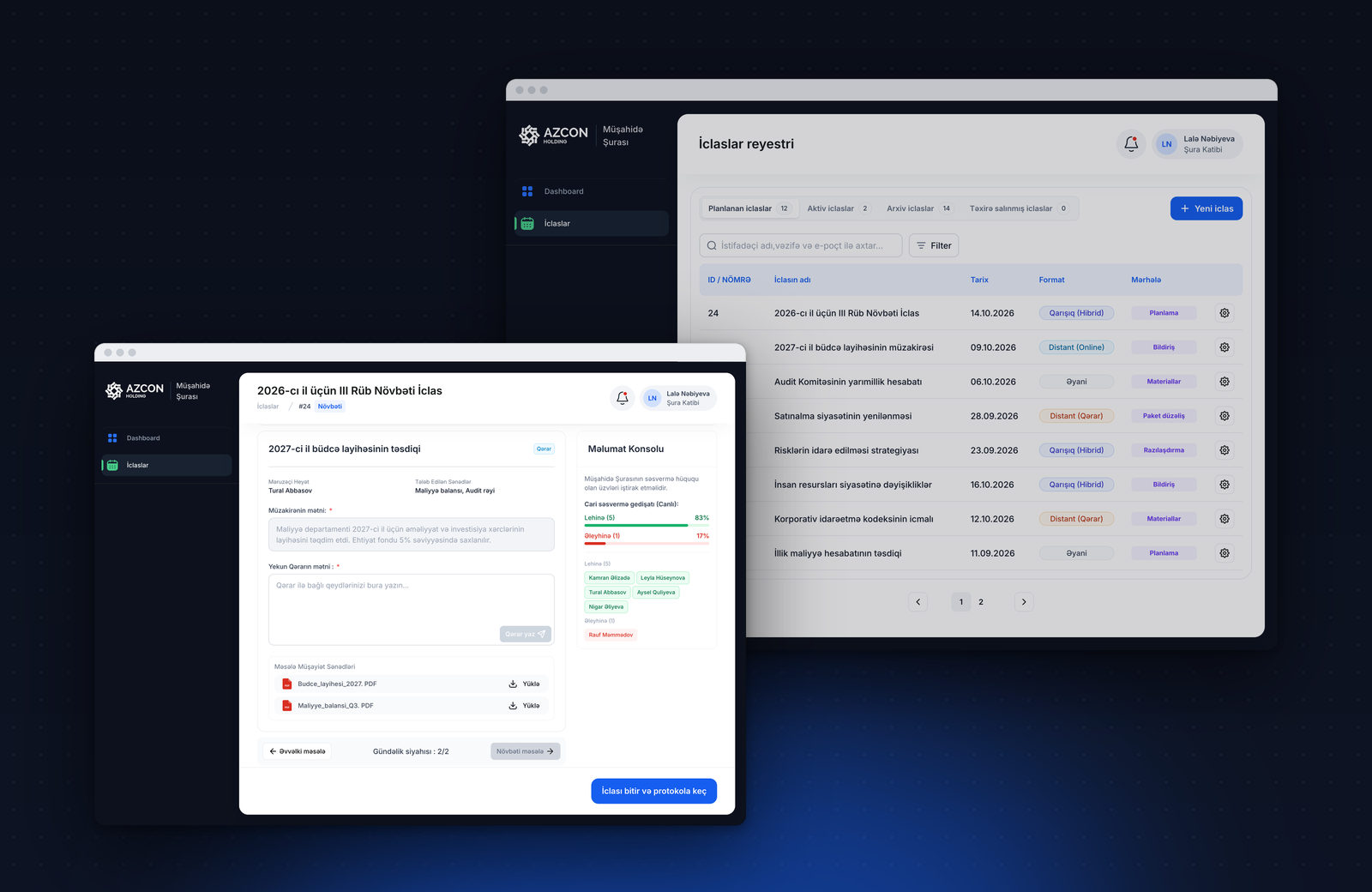
Every meeting sits in one registry, split into planned, active, archived and postponed tabs. Each row carries two chips: the format and the stage of the lifecycle, so the secretary sees what needs a push without opening anything. Filters narrow by format and date range. A tab with nothing in it gets a picture and one button, because an empty table with headers is just a very formal way of saying nothing.
The form follows the format
A meeting starts with a name, a format and a type. The format decides the rest: in person asks for a room, online swaps the room for a link, hybrid asks for both, and a decision by written vote only needs a date. Fields appear and disappear in place instead of sending people to a second screen, and the new meeting lands at the top of the registry.
An agenda item is a small dossier
An agenda item is more than a title. The wizard asks for the subject, the type (a decision needs a vote, a discussion does not) and the speakers, then the materials, which go out for review to the departments that have to sign off. Participants come next, then conflicts of interest, declared with a reason. Four short steps, and “Keç” skips what doesn’t apply yet.
Bad news goes on top
Between the agenda and the meeting, things change, and the page says so in a banner above the agenda rather than in an email nobody reads. When a member can’t attend in person, the format changes in one modal and the date and room stay put. If the chair sends the package back, the reason sits at the top of the page, next to the one button that moves the meeting back to planning.
Minutes for talk, votes for decisions
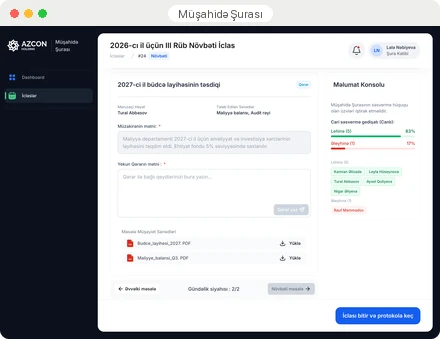
The live screen starts with attendance, because quorum is a fact someone has to record. Then it goes item by item. A discussion item needs minutes and says outright that no vote is required; a decision item shows the vote as it comes in. Closing early lists exactly who hasn’t voted yet, which is more useful than a disabled button and less awkward than asking the room.
Signed, sealed, archived
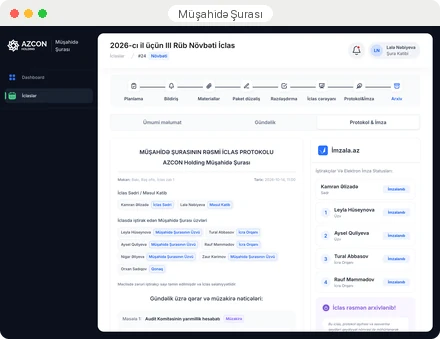
The protocol is assembled from what was recorded live. The secretary sets the signing order once, with the chair pinned on top, and the chair reads it first. A returned protocol comes back with the reason on top; resent and approved, the signatures arrive in order through İmzala.az. When the last one lands, the meeting is archived and locked, and the stepper finally runs out of steps.
Sign-off
I presented the flow to stakeholders and secured their sign-off. Fittingly, a signature was involved.